Address
Upperhill, Nairobi.
Kenya.
Work Hours
Monday to Friday: 7AM - 7PM
Weekend: 10AM - 5PM
Address
Upperhill, Nairobi.
Kenya.
Work Hours
Monday to Friday: 7AM - 7PM
Weekend: 10AM - 5PM

 Byadmin
As businesses and institutions continue to embrace digital transformation, traditional methods of recording attendance and controlling access are becoming outdated. Paper registers, manual sign-in books, and conventional keys are not only inefficient but also prone to errors, fraud, and security risks.
Biometric technology has revolutionized the way organizations manage attendance and secure their premises. By using unique physical characteristics such as fingerprints, facial features, or fingerprints combined with facial recognition, biometric systems provide a fast, accurate, and secure way to identify individuals.
Whether you’re managing a school, office, factory, hospital, or commercial building, implementing a biometric attendance and access control system can improve efficiency, strengthen security, and simplify daily operations.
In this guide, we’ll explore how biometric systems work, their benefits, and why they’re becoming an essential investment for modern organizations.
A biometric system is a security solution that identifies or verifies a person’s identity using unique biological characteristics. Unlike passwords, PINs, or access cards that can be forgotten, shared, or stolen, biometric identifiers are unique to each individual.
Common biometric technologies include:
Among these, fingerprint and facial recognition are the most widely used because they are fast, reliable, and cost-effective.
Biometric attendance systems are designed to accurately record employee or student attendance. During enrollment, the system captures a user’s biometric data and stores it securely.
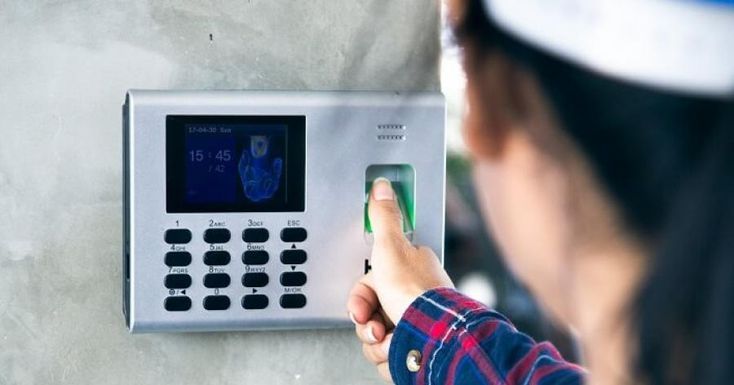
When a person arrives, they simply place their finger on the scanner or stand in front of a facial recognition terminal. The system compares the live biometric data with the stored template and verifies the user’s identity within seconds.
Once verified, the attendance record is automatically saved with the exact date and time. This eliminates manual record-keeping and ensures accurate attendance data.
Both fingerprint and facial recognition systems have unique advantages, and the best choice depends on your environment.
Fingerprint systems are widely used because they are affordable, reliable, and highly accurate. They are ideal for offices, schools, retail businesses, and factories where employees can easily scan their fingerprints.
Facial recognition systems identify users without physical contact. This makes them ideal for environments where hygiene and convenience are priorities, such as hospitals, corporate offices, and high-traffic facilities. They also work well for businesses that require quick, touch-free verification.
Many modern devices combine fingerprint and facial recognition, giving organizations greater flexibility and reliability.
Biometric attendance systems provide a wide range of advantages beyond simply recording arrival and departure times.
Manual attendance sheets are vulnerable to mistakes and manipulation. Biometric systems eliminate guesswork by recording attendance automatically.
One common problem with manual systems is “buddy punching,” where one employee signs in for another. Because biometric data is unique to each individual, this type of fraud is virtually impossible.
Employees or students can check in within seconds, reducing queues and saving valuable time, especially in organizations with large workforces.
Since attendance records are precise, payroll calculations become faster and more accurate. Overtime, lateness, and absences can be tracked automatically.
Managers gain real-time insights into attendance patterns, helping them identify absenteeism, lateness, and productivity trends.
Biometric technology is also widely used to control access to buildings, offices, server rooms, laboratories, and other restricted areas.
Instead of relying on keys or access cards, authorized users simply verify their identity using a fingerprint or facial scan.
This ensures that only approved individuals can enter sensitive locations, improving overall security.
Unauthorized access can result in theft, data breaches, equipment damage, or safety risks. Access control systems help businesses protect people, property, and confidential information.
Benefits include:
Modern biometric systems can integrate seamlessly with other technologies, creating a smarter and more connected workplace.
For example, biometric systems can work alongside:
This integration reduces manual work and improves operational efficiency.
Biometric systems are suitable for a wide variety of industries and organizations.
These include:
Each organization can customize the system to suit its operational requirements.
When choosing a biometric solution, consider devices that offer:
Selecting the right device ensures reliable performance and long-term value.
A biometric system performs best when it is properly planned and installed.
To maximize effectiveness:
Professional installation helps avoid common setup issues and ensures smooth operation from day one.
Biometric technology continues to evolve with advancements in artificial intelligence and machine learning. Future systems are becoming faster, more accurate, and capable of recognizing users under a wider range of conditions.
Emerging trends include:
These innovations are making biometric systems even more valuable for organizations seeking secure and efficient operations.
At DEVPOS ICT Solutions, we provide professional biometric attendance and access control solutions tailored to businesses, schools, and institutions of all sizes. Our team handles every stage of the process—from consultation and system design to installation, configuration, user enrollment, training, and ongoing support.
We work with trusted biometric technologies to deliver accurate attendance tracking, secure access control, and seamless integration with existing business systems. Whether you need a single attendance device or a comprehensive multi-site solution, we are committed to providing dependable systems that improve security, accountability, and operational efficiency.
Biometric attendance and access control systems have transformed the way organizations manage people and protect their facilities. By replacing outdated manual processes with secure, automated solutions, businesses can improve accuracy, strengthen security, reduce fraud, and save valuable time.
As organizations continue to embrace digital transformation, biometric technology is no longer just an option—it has become an essential tool for modern workforce management and facility security.
Whether you’re looking to improve attendance tracking, secure restricted areas, or modernize your organization’s operations, DEVPOS ICT Solutions has the expertise and technology to help.
Our experienced team is ready to recommend, install, and support a biometric solution that meets your unique needs.
Contact DEVPOS ICT Solutions today and discover how biometric technology can make your workplace smarter, safer and more efficient.